Suicide Loss Healing. What Five People on One Retreat Taught Me About Grief and the Body
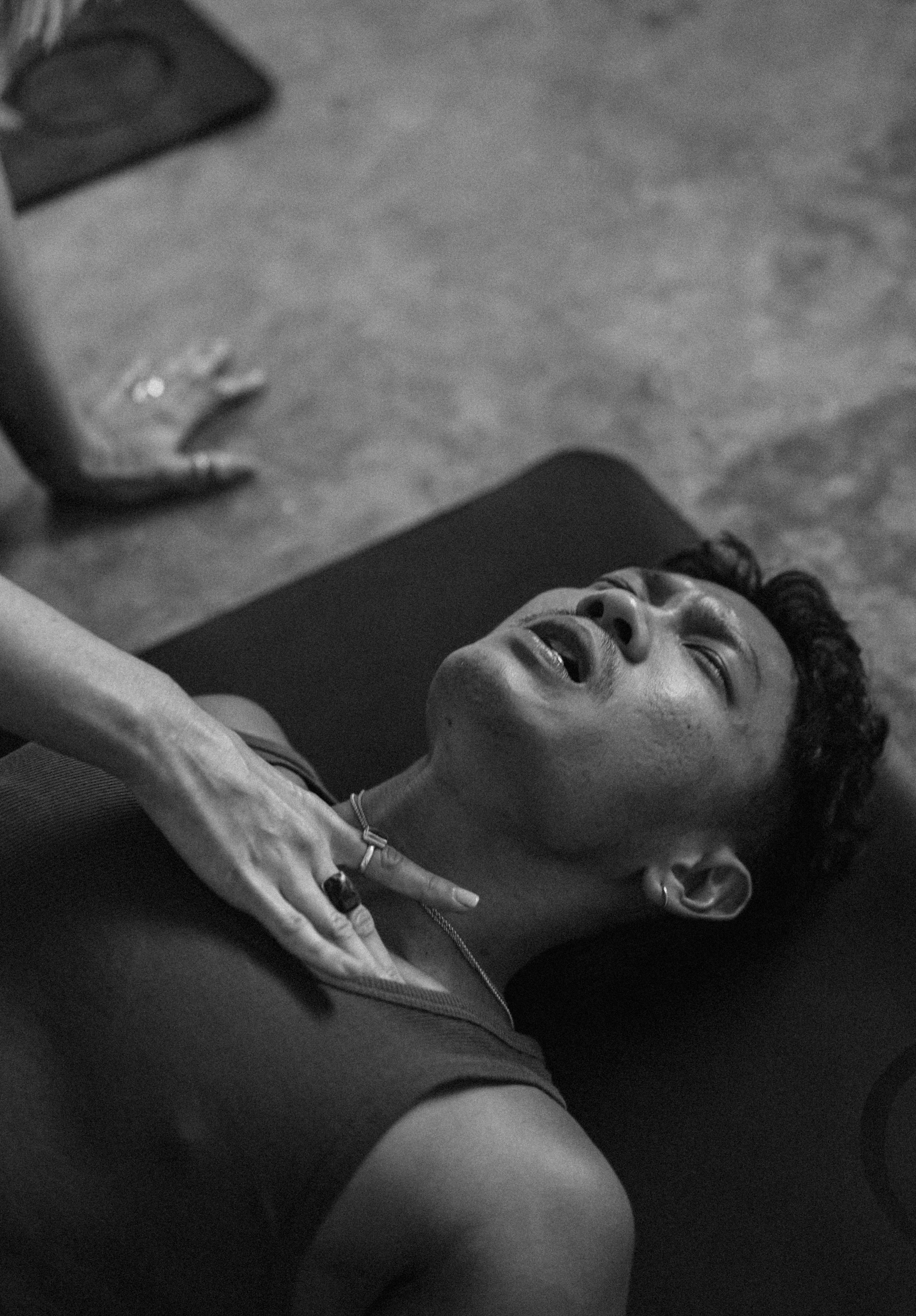
Five of the eight people on my last healing retreat had lost someone to suicide. Five different people, five different losses, and the same pattern running through every one of them. I have been holding space for suicide loss at JAX for years now, and I lost my own brother this way, so I knew what I was looking at. Even so, seeing it so clearly in one room was something I needed to write down, because if you are searching for suicide loss healing right now, this is the part nobody explains properly.
What suicide loss does to the body
Every person in that room had lived through a version of the same thing. Hair falling out. Nails that stopped growing. Panic attacks that arrived out of nowhere. Some had seizures, blackouts and hallucinations. Gut problems, fertility problems, and health issues that went on to harm them for years.
This is what trauma does after the event. Sudden traumatic loss floods the body with cortisol and adrenaline and keeps it there. A stress response that was only ever meant to last a few minutes ends up running for months, and months of that disrupts the immune system, the gut, the hormones, sleep, and even the hair and nail cycle. The body is spending everything it has on surviving, and growing hair is not survival. Left unmanaged, suicide bereavement is the start of a downward spiral in the body that most people never connect back to the loss.
One loss becomes ten
The second part of the pattern was what happened to their lives. Jobs let them go. Partners left, or they found themselves drawn to awful partners in the depths of grief. Families fell apart, fought over wills and estates, blamed the partner, blamed the family. One loss became ten.
A nervous system in survival mode cannot hold a job, a relationship or a boundary. It runs on the oldest part of the brain, looking for threat and reaching for anything familiar, even when familiar is harmful. The secondary losses after suicide are the trauma spreading outward into every corner of a life.
What the mind does with it
Some of them had found their loved one. The others had not, and imagined it anyway, over and over. Many became suicidal themselves. Most lived in fear of losing their own children next.
This is the pain body. Traumatic memory and imagined memory are stored the same way, as sensation, below the part of the brain that holds language. You can talk about it for years in therapy, understand it perfectly, and still feel the same agony underneath. Grief after suicide is a grief that talking alone will never reach, and that is why so many people searching for suicide grief support feel they have tried everything and nothing has shifted.
The fear that keeps people stuck
Nearly all of them arrived with the same fear. That releasing the pain would mean releasing the person. That the agony was the last thing still connecting them to the one they lost.
What happened on the mat was the opposite. As the pain moved, their loved one's presence was right there with them. Acceptance, understanding, forgiveness, connection. A meeting that cannot be explained to anyone who has not felt it for themselves.
Our loved ones in spirit are everywhere and everything at once. In deep altered states you can meet them in their new form, and it is profound. We have to meet them halfway, though. Raise our vibration, widen our capacity to feel, and release the pain that stands between us. That is what healing after suicide loss looks like when it goes beneath the surface.
The people closest to it are at risk too
Many know this and some do not, but the people closest to someone who dies by suicide are themselves at far higher risk. A UK study of over three thousand bereaved adults found those bereaved by suicide were 65 percent more likely to attempt it than people bereaved by natural causes, with around one in ten going on to try. The survival system is on full alert after this kind of loss, and it is in these times that we need to rally together and offer support that goes beneath words. For anyone feeling suicidal after losing someone, releasing that pain from the body and learning to deeply regulate can be life altering.
Signs you are still carrying suicide loss in the body
If you are reading this years after the loss and wondering why you still feel the way you do, here is what I would look for. Exhaustion that sleep never touches. Being on edge in rooms that are perfectly safe. A jaw that clenches at night, a gut that plays up, illnesses that keep coming back. Bracing when the phone rings. A fear of losing the people you have left that sits underneath everything. None of this means you are failing at grief. It means the loss is still living in your nervous system, and the nervous system is where it has to be met.
What suicide loss healing at a retreat involves
People often ask what a healing retreat for suicide loss actually looks like, so here it is plainly. You arrive in Uluwatu and join a small group, usually ten to twelve people, many of whom are carrying something similar. Each day holds somatic healing sessions with breathwork, bodywork and energy work, with the sauna, the ice bath and long table meals in between. There is no pressure to perform your grief or explain it. The body is given somewhere safe enough to let go of what it has been holding, and the group around you makes that safety real in a way that is hard to find anywhere else. Most people leave with more peace than they have felt in years, and with a connection to their person that they did not believe was possible.
Why a healing retreat, and why Bali
The work we do at our healing retreats in Bali goes beneath the language centre, into the pain body, the emotional body, the body itself. Breath, bodywork and energy work, held in a small group of people who understand, so that what has been held for years can finally move and there is room for your person again.
I have been through this myself. It is a terror I would wish on nobody, and I know first hand how much work it takes to come out the other side. This is no small bump in the road and it will never simply pass with time. It embeds, and it eats away at you. Healing takes real dedication. I promise you there is so much to live for on the other side of this pain.
Our JAX healing retreats run once a month in Uluwatu, Bali, and are built for exactly this. If you are struggling right now, please reach out to someone today. You do not have to carry this alone.
Join us online to begin your emotional growth journey no passport required.
Come to a JAX Day Retreat for a powerful immersion into trauma-informed healing.
Join us for a two-hour in-person JAX class and experience the method firsthand.
Learn more about facilitator training: https://www.jaxhealingretreat.com/kundalinitraining